 CarFlow AI
Free VIN Decoder
Enter a 17-character VIN to see the make, model, year, engine and where the car was built. Every character is explained as you type. Free, no signup.
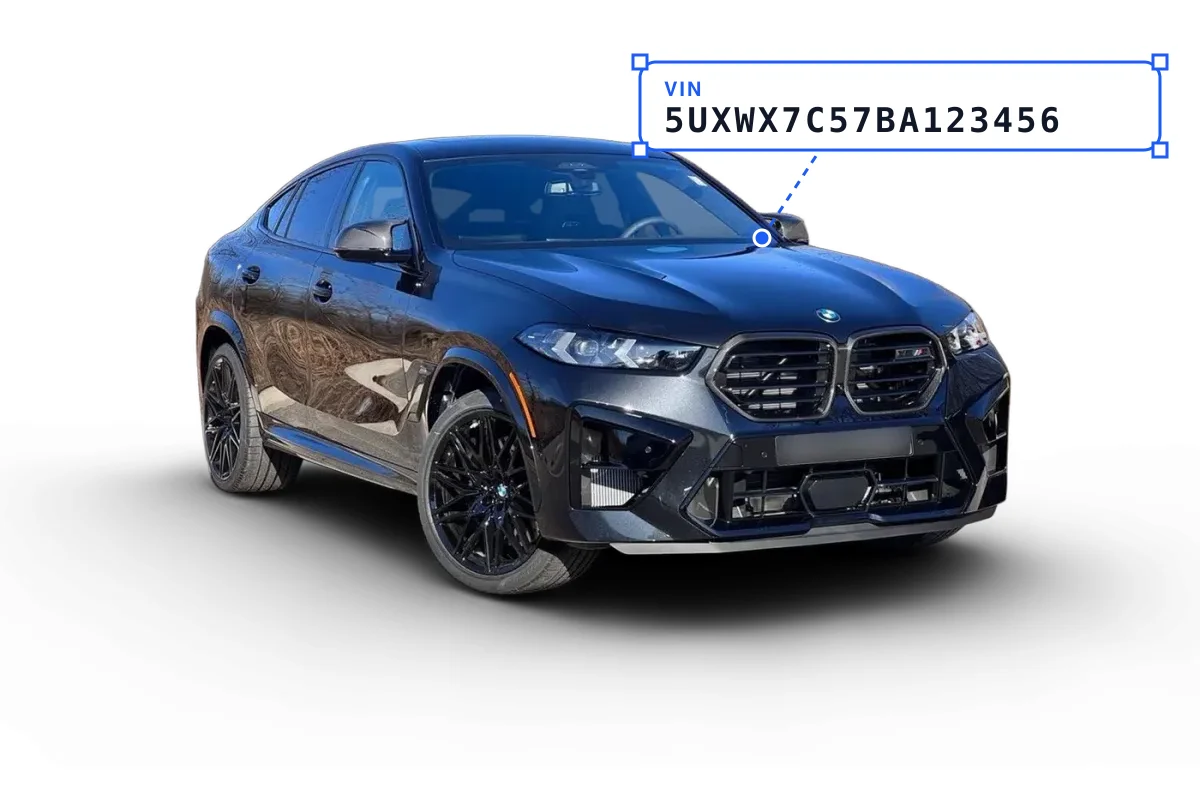
No VIN at hand? Try an example:
- 1-31-3 · Manufacturer
- 4-84-8 · Description
- 99 · Check
- 1010 · Year
- 1111 · Plant
- 12-1712-17 · Serial number
Data from the public NHTSA vPIC database. CarFlow is not affiliated with any vehicle manufacturer; make and model names belong to their owners.
How to decode a VIN
Find the VIN
Look at the dashboard by the windshield, the driver door jamb or the registration papers.
Type or paste it
17 characters, letters and digits. Spaces and dashes are removed for you.
Check for typos
The check digit is verified in your browser, so a mistyped character shows up before you press the button.
Read the result
Make, model, year, engine, drive type and the plant where the car was assembled.
What a VIN tells you
A VIN is a 17-character code given to every road vehicle built since 1981. Each group of characters has its own meaning.
Characters 1-3: manufacturer
The World Manufacturer Identifier (WMI). The first character points to the region, the first two to the country the code is assigned to, all three to the company.
Characters 4-8: vehicle description
Model line, body style, engine and restraint system. Each manufacturer has its own scheme, which is why a database is needed to read this part.
Character 9: check digit
A control value calculated from the other 16 characters. It is mandatory in North America and catches most typing mistakes.
Characters 10-17: year, plant, serial
The 10th character is the model year, the 11th the assembly plant, and the last six are the serial number of this exact vehicle.
Where to find the VIN
The same number is printed in several places. If they do not match, ask the seller why before you pay.
Dashboard
Driver side, at the base of the windshield, readable from outside the car.
Driver door jamb
On the certification label where the door latches, next to the build date and tire pressures.
Title and registration
Printed on the vehicle title, the registration card and the insurance documents.
Body or frame stamp
Stamped into the metal under the hood, on the firewall or on the frame. This one cannot be swapped like a sticker.
Frequently asked questions
Yes. There is no signup, no card and no paid report at the end. You can decode up to 30 VINs per hour.
From vPIC, the public vehicle database of the US National Highway Traffic Safety Administration (NHTSA). Manufacturers are required to submit their VIN schemes to it for every vehicle they sell in the United States.
The database covers vehicles built for the US market. For a car sold in Europe or Asia it usually knows the manufacturer and the country, but not the model or engine. The position-by-position breakdown works for any VIN.
The 9th character does not match the value calculated from the rest of the VIN. Outside North America manufacturers are free to use that position for something else, so the warning is expected there. For a US or Canadian vehicle, re-check the VIN for a mistyped character.
No. The tool reads what is encoded in the VIN itself: manufacturer, model, year, engine and plant. It has no records about what happened to the vehicle afterwards.
No. Vehicles built before 1981 used shorter numbers in formats that differed from one manufacturer to the next, and the database does not cover them.
The decoded result is cached so the same VIN does not have to be looked up twice. It is not linked to you: there is no account, and the VIN is not sent to our analytics.